Revenue looks strong in the board deck.
Then pipeline review starts, definitions shift, and the room gets quiet.
Same stages. Same CRM. Very different interpretations of what’s real.
That gap between reported progress and actual traction is where performance leaks.
A sales operating system closes it by setting standards for evidence, forecasting, and execution.
We’ll break down what a sales operating system is, how it works, and why growing companies eventually need one.
Key Notes
- A sales operating system links strategy, execution, instrumentation, and governance into one enforceable structure.
- Territory design, compensation, and planning are structural OS decisions, not isolated tactics.
- AI amplifies disciplined systems and magnifies weak definitions.
What Is a Sales Operating System?
A sales operating system is the set of standards that connects daily selling actions to what leadership can inspect, measure, and improve.
That’s the clean definition.
In simpler terms, it’s the operating layer that:
- Defines how deals move
- Defines what “real” means at each stage
- Captures evidence automatically
- Aligns forecasting rules
- Enforces accountability through cadence and governance
When someone asks what is OS in sales, this is what they’re usually trying to understand. Not the tech stack. The system underneath it.
A true sales OS does three things simultaneously:
- Orchestrates workflow so reps know what to do next
- Instruments behavior so leaders can see what’s real
- Governs decisions so the organization moves as one system
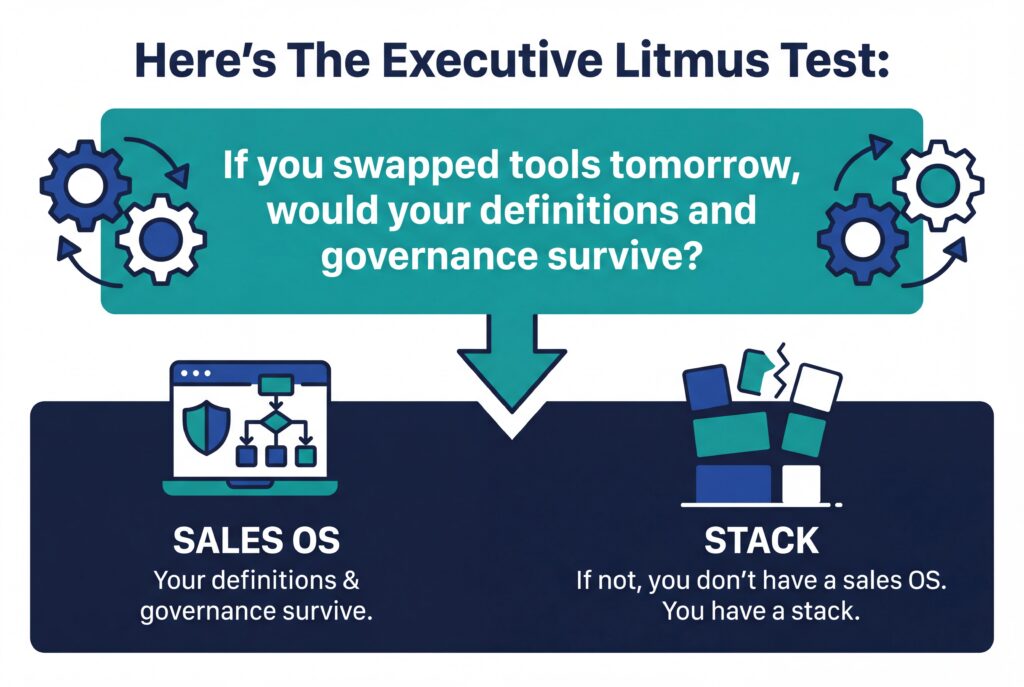
If you removed Salesforce, HubSpot, or any other platform tomorrow, the operating system should still exist conceptually.
The definitions, the stage criteria, the forecast categories, the review cadence.
The tools support it.
They do not define it.
Sales Operating System vs Sales Process vs Sales Operations Software
These terms get mixed together constantly, but they’re not the same.
Sales Process
A sales process is a sequence of stages (discovery, qualification, proposal, close).
It answers one question: where is the deal?
It does not answer:
- What evidence qualifies the deal to move
- What behavior must occur before forecasting it
- What governance enforces consistency
- How managers inspect quality versus optimism
Process is necessary.
It is not sufficient.
Sales Operations Software
Sales operations software manages reporting, automation, and system configuration.
It helps with:
- Territory alignment
- Comp tracking
- CRM automation
- Dashboard creation
It does not create shared definitions of truth.
You can have best-in-class sales operations software and still have inconsistent forecasting because stage definitions are vague and governance is weak.
Sales Operating System
A sales operating system sits above both.
It defines:
- What counts as qualified
- What counts as forecastable
- What evidence is required
- What cadence enforces discipline
- What metrics matter and why
It turns tools and processes into a cohesive machine.
When a Sales OS Becomes Essential
Most companies don’t decide to implement a sales operating system.
They grow into needing one.
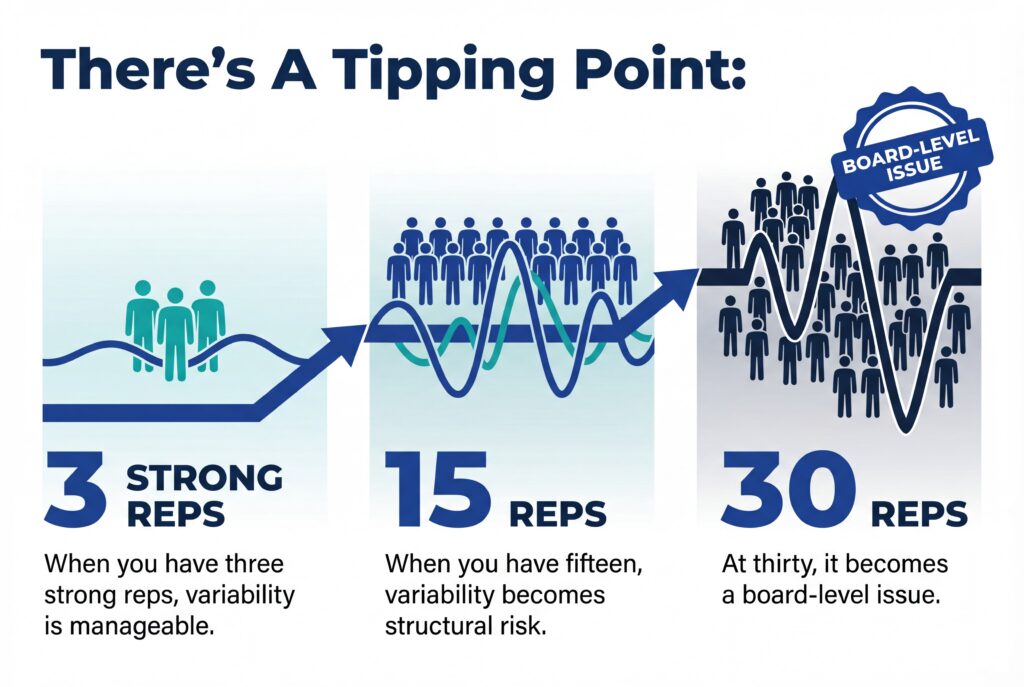
You know you’ve crossed the threshold when:
- Forecast misses start affecting hiring and cash decisions
- Managers spend more time reconciling numbers than coaching deals
- Reps run materially different motions for similar buyers
- Top performers cannot explain their edge in repeatable terms
At this stage, a sales OS is not about optimization, but about stability.
Without it, execution becomes personality-driven.
With it, performance becomes system-driven.
What Breaks Without a Sales Operating System?
Let’s look at failure signatures:
Visibility Collapse
Deal fields exist. Next steps exist. Notes exist.
But there is no consistent definition of what “real” means.
Pipeline reviews become storytelling sessions.
Leaders ask for more detail.
Reps provide narrative.
No one leaves with objective clarity.
Forecast as Opinion
Categories are interpreted differently across teams.
“Commit” means different things in different regions, exit criteria are flexible, and optimism creeps in late.
Forecast variance becomes normalized.
Data Distrust
CRO, CFO, and RevOps pull different numbers for the same question.
Analytics stop driving decisions because no one agrees on what the data represents.
Once trust erodes, dashboards become decorative.
Siloed Operations Load
Manual reconciliation becomes the system.
Shadow spreadsheets appear. Managers track deals offline. RevOps spends cycles cleaning instead of analyzing.
This is operational debt.
And it compounds.
The Architecture of a Modern Sales Operating System
A real sales operating system has four interlocking layers.
Remove one, the system weakens.
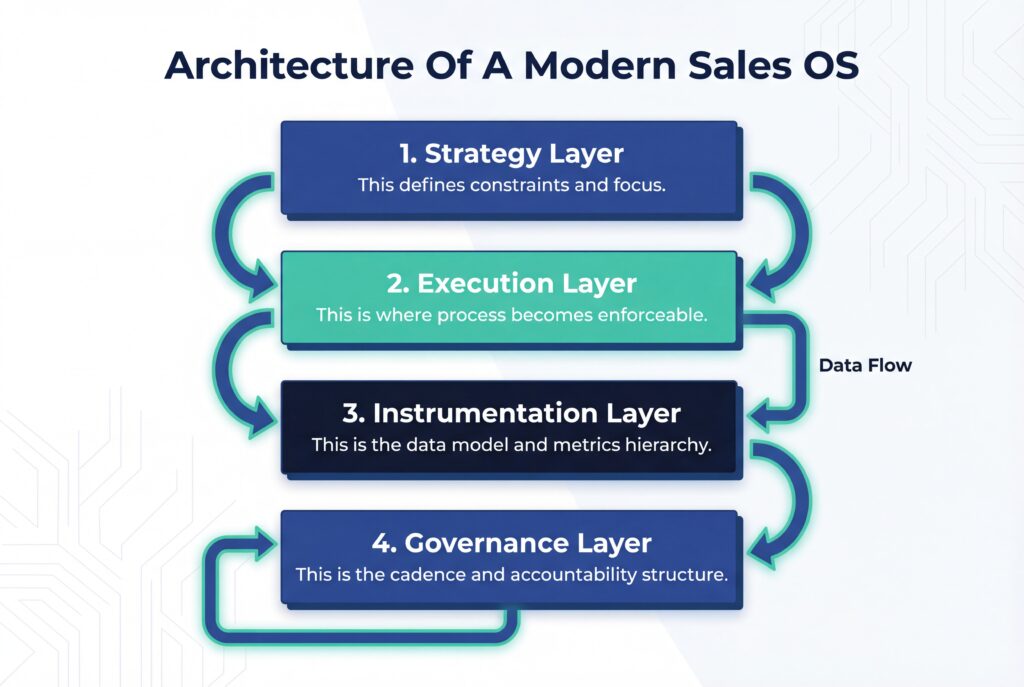
1. Strategy Layer
This defines constraints and focus.
- ICP and segmentation
- Coverage model
- Value proposition clarity
- Definition of success
It also defines what not to pursue.
Without constraints, execution fragments.
2. Execution Layer
This is where process becomes enforceable.
- Stage definitions with explicit exit criteria
- Required evidence for advancement
- Mutual action plans
- Defined next-step discipline
Execution answers: what must be true for this deal to move?
Not “what happened.” What must be true.
3. Instrumentation Layer
This is the data model and metrics hierarchy.
- Leading indicators tied to stage progression
- Evidence capture fields
- Forecast category definitions
- Data completeness standards
Instrumentation makes behavior measurable.
Without it, you cannot distinguish activity from progress.
4. Governance Layer
This is the cadence and accountability structure.
- Weekly pipeline inspection
- Forecast submission discipline
- Clear decision rights
- Defined review formats
Governance prevents drift.
Drift is natural. Discipline is designed.
When these four layers align…
The sales OS becomes resilient.
Strategy shapes execution. Execution feeds instrumentation. Instrumentation informs governance. Governance refines strategy.
It becomes a loop.
High-Leverage System Connections Executives Get Wrong
Even strong operators miss these connections.
Territory Design Is an OS Decision
Territory planning is not just coverage.
It defines pipeline requirements, quota feasibility, and resource load.
If territory potential does not align with quota design, no amount of coaching fixes it.
Your sales OS must link:
- Market potential
- Rep capacity
- Quota expectations
Otherwise, underperformance is structural, not behavioral.
Compensation Is Behavioral Enforcement
Comp plans shape what reps optimize for.
If comp rewards bookings regardless of stage integrity, your forecast discipline collapses.
If comp penalizes cross-sell complexity, expansion stalls.
A sales OS must align compensation mechanics with defined stage evidence and forecast governance.
Otherwise, incentives quietly sabotage the system.
Forecasting Is a Governed Process
Forecasting is not a number.
It is a process built on:
- Defined categories
- Required evidence
- Audit trails
- Behavioral compliance
Without these, forecasting becomes mood-driven.
A true sales operating system makes forecasting inspectable.
Common Sales OS Mistakes
These are predictable:
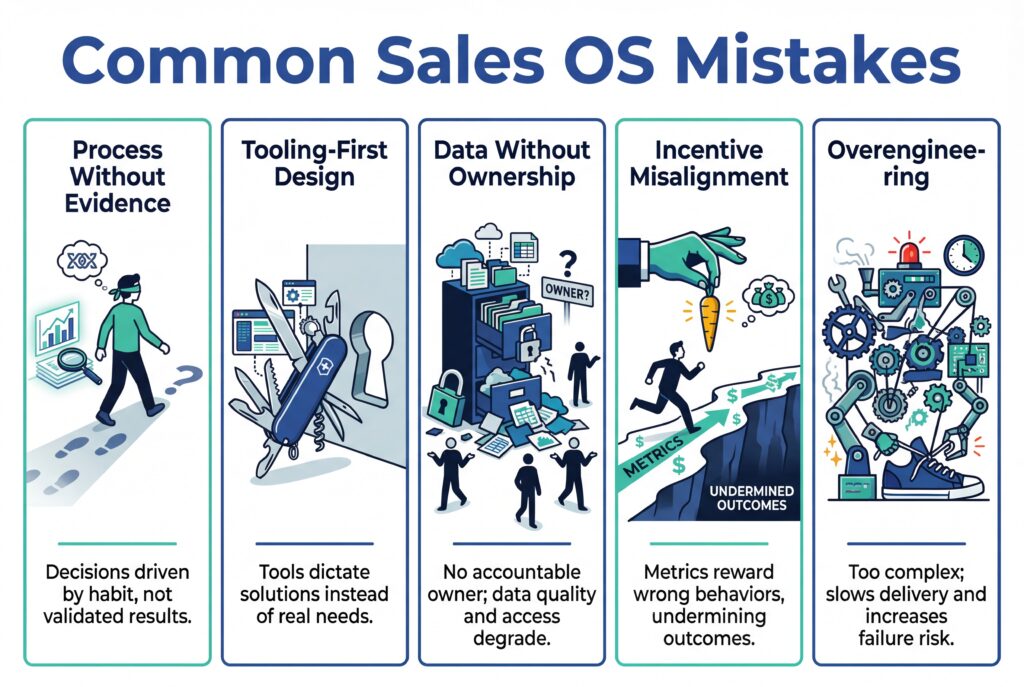
Process Without Evidence
Stages exist, but exit criteria are vague.
“Verbal yes” counts as late-stage.
Forecast accuracy remains low because definitions are soft.
Tooling-First Design
Leaders implement platforms before defining standards.
Adoption drops. Reps resist. Shadow systems grow.
Technology amplified ambiguity instead of removing it.
Data Without Ownership
No one owns definition integrity.
Metrics get debated instead of used.
Trust decays.
Incentive Misalignment
Comp contradicts stage governance.
Sandbagging appears. Deal pulling becomes normal.
The system fragments.
Overengineering
Too many required fields. Too many meetings.
Seller burden rises.
Signal quality drops.
A sales OS must reduce noise while increasing clarity.
Not the other way around.
AI Sales Operating Systems: What Changes, What Doesn’t
An AI sales operating system does not replace governance.
It increases leverage inside it.
AI adds value in three high-impact areas:
- Signal extraction from calls and communication
- Real-time risk detection in pipeline movement
- Automated data capture to reduce seller burden
But here’s the catch:
If your definitions are inconsistent, AI will scale inconsistency.
Confident outputs from inconsistent inputs are dangerous.
Before layering AI, ensure:
- Stage definitions are standardized
- Evidence requirements are clear
- Data hygiene is monitored
- Forecast categories are enforced
AI should operate inside a trusted system of action.
The 3-3-3 Rule in Sales & Where It Fits
“What is the 3-3-3 rule in sales?” depends on who you ask.
The most common version refers to 3×3 research:
Three minutes. Three relevant insights. One personalized angle.
On its own, it’s a tactic.
Inside a sales operating system, it becomes measurable behavior.
Operationalize it by:
- Defining what counts as a valid insight
- Embedding a required capture field
- Inspecting insight quality in pipeline reviews
- Tracking conversion impact
Without inspection, it becomes checkbox activity.
Complex buying motions often require more depth.
Multi-threading and stakeholder mapping go beyond 3×3.
The lesson is not about the number three…
It’s about enforceable preparation standards.
How to Build or Rebuild a Sales Operating System
Change feels disruptive.
But it doesn’t have to be.
Step 1: Audit the Current Reality
Map:
- Actual workflows
- Meeting cadence
- Data friction points
- Shadow systems
Interview reps and managers.
You’re not auditing documentation.
You’re auditing behavior.
Step 2: Define a Small Set of Non-Negotiable Standards
Focus on:
- Stage evidence clarity
- Forecast category definitions
- Minimum required data for leadership trust
Resist the urge to redesign everything.
Start with what impacts forecast integrity and coaching leverage.
Step 3: Embed Standards Into Workflow
Change what leaders inspect weekly.
Change what reps must produce before moving a deal.
Documentation follows behavior.
Not the reverse.
Adoption, Resistance, Reality
There will be pushback.
“This is admin work.”
“My deals are different.”
“We already have a process.”
Expect it.
Prevent shelfware by ensuring:
- Recording and selling are the same motion
- Managers enforce evidence, not opinions
- Early wins are visible and measurable
A phased rollout works best
Month one: assess and define.
Next: implement two to three high-leverage standards.
Expand iteratively.
Adoption follows clarity.
How to Measure If Your Sales OS Is Working
Metrics must follow a hierarchy:
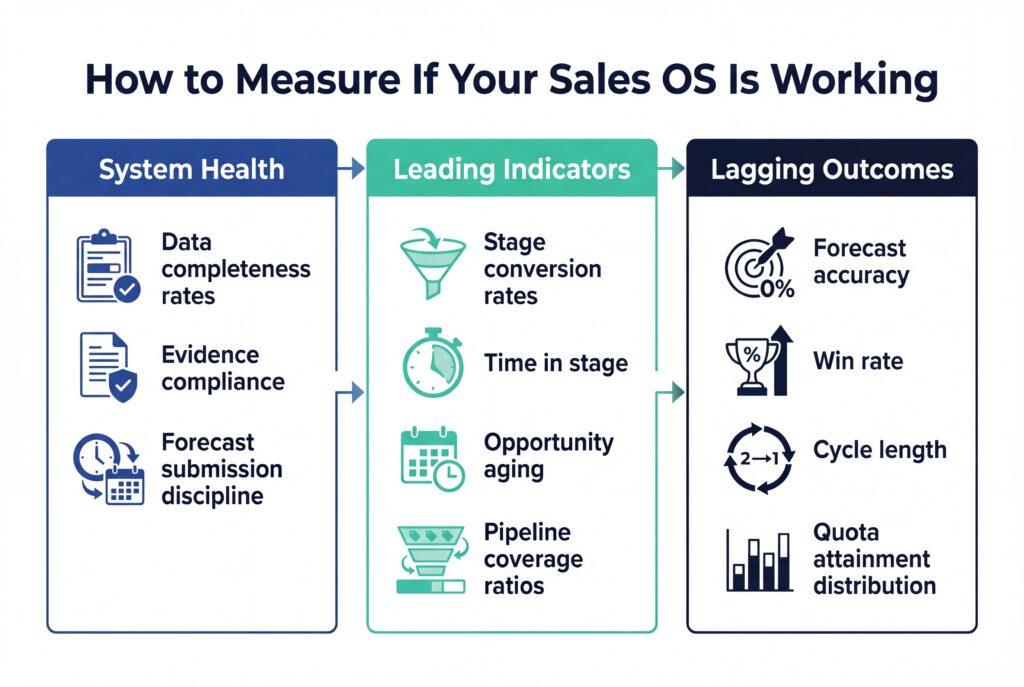
In the first 90 days, expect improvements in forecast hygiene and pipeline visibility before revenue shifts dramatically.
Behavior changes precede performance gains.
If shadow spreadsheets shrink and coaching conversations shift from status updates to obstacle removal, your sales OS is taking hold.
Using EnableU as Your Sales Operating System
A sales operating system is the layer that makes execution inspectable and enforceable. EnableU is built to be that layer.
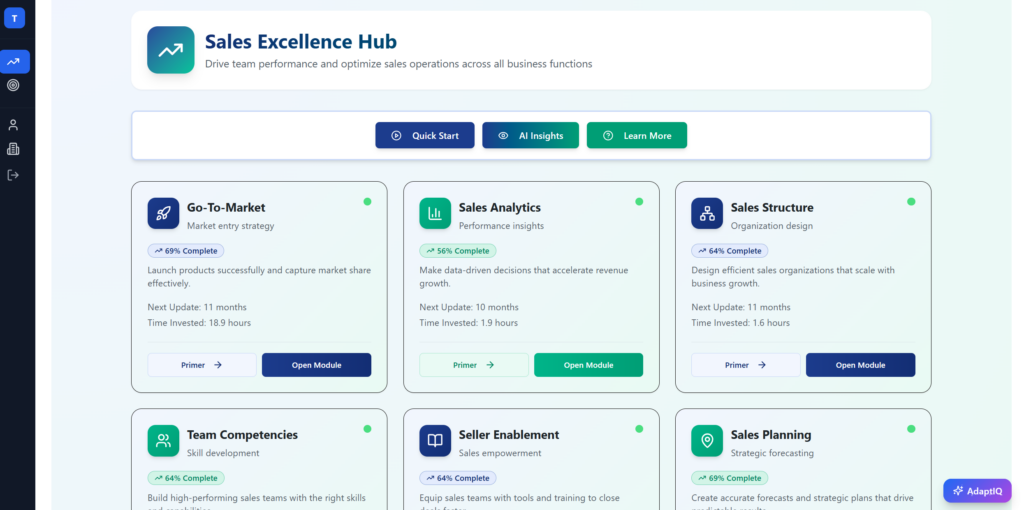
It connects strategy, workflow, data, and governance into one Sales Excellence System that runs in the flow of work.
For Executive Teams
EnableU turns your framework into daily execution across eight standards:
- Align go-to-market, structure, planning, and compensation around one system
- Enforce stage evidence and forecast discipline automatically
- See pipeline health, deal risk, and leading indicators in real time
- Identify competency gaps and coach with data, not opinion
Outcome:
Predictable revenue, cleaner forecasts, faster ramp.
For Managers & Reps
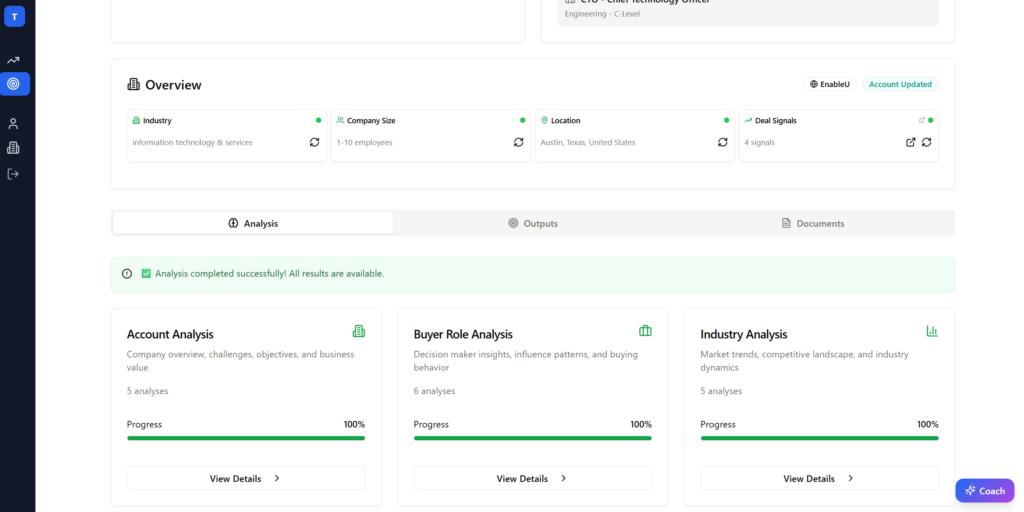
With Deal Pilot embedded, the operating system moves from static design to live guidance:
- Prospect and account intelligence in minutes, not hours
- Real-time coaching during calls
- Contextual messaging based on buyer role and stage
- Signal-driven deal acceleration and risk alerts
Outcome:
Higher win rates, shorter cycles, less admin drag.
EnableU does not replace your stack
It operationalizes it.
Your:
- strategy stops living in decks
- process stops drifting by region
- forecast stops depending on optimism
The result is simple:
A sales operating system that runs well.
👉 Ready to turn your sales strategy into daily, measurable execution? Start your free trial.
Frequently Asked Questions
What is a sales operating system in simple terms?
A sales operating system is the framework that defines how your sales team actually runs day to day. It connects strategy, process, data, and governance into one enforceable system so performance becomes predictable instead of personality-driven.
Is a sales OS the same as sales operations software?
No. Sales operations software supports reporting and automation, but a sales OS defines the rules, standards, and governance underneath it. The software is the toolset. The operating system is the discipline and structure that makes the tools meaningful.
What is an AI sales operating system?
An AI sales operating system uses automation and signal analysis to enforce standards in real time. It captures evidence, flags risk, suggests next steps, and improves forecast reliability – but only if the underlying definitions and governance are solid.
Do small teams really need a sales operating system?
Early-stage teams can operate without a formal sales OS, but once variability starts affecting forecast accuracy or ramp speed, structure becomes critical. The earlier you define standards, the easier scaling becomes later.
Conclusion
A sales operating system is not another layer of admin. It is the structure that makes growth stable instead of fragile. It defines what “real” means in your pipeline, what counts in your forecast, and how territory, compensation, and governance reinforce each other instead of conflict.
Without it, execution drifts and optimism fills the gaps.
With it, performance becomes inspectable, scalable, and defensible.
If you want to see how a structured Sales Excellence framework with eight enforceable standards can bring territory, comp, forecasting, and execution into one governed system, start a free trial and test it against your own reality.
Leave a Reply